
During Pope Leo XIV’s apostolic visit to Paris, an exceptional work by Odiot took its place at the heart of the ceremonies: the monumental silver Virgin and Child, created in 1826 for Notre-Dame de Paris.
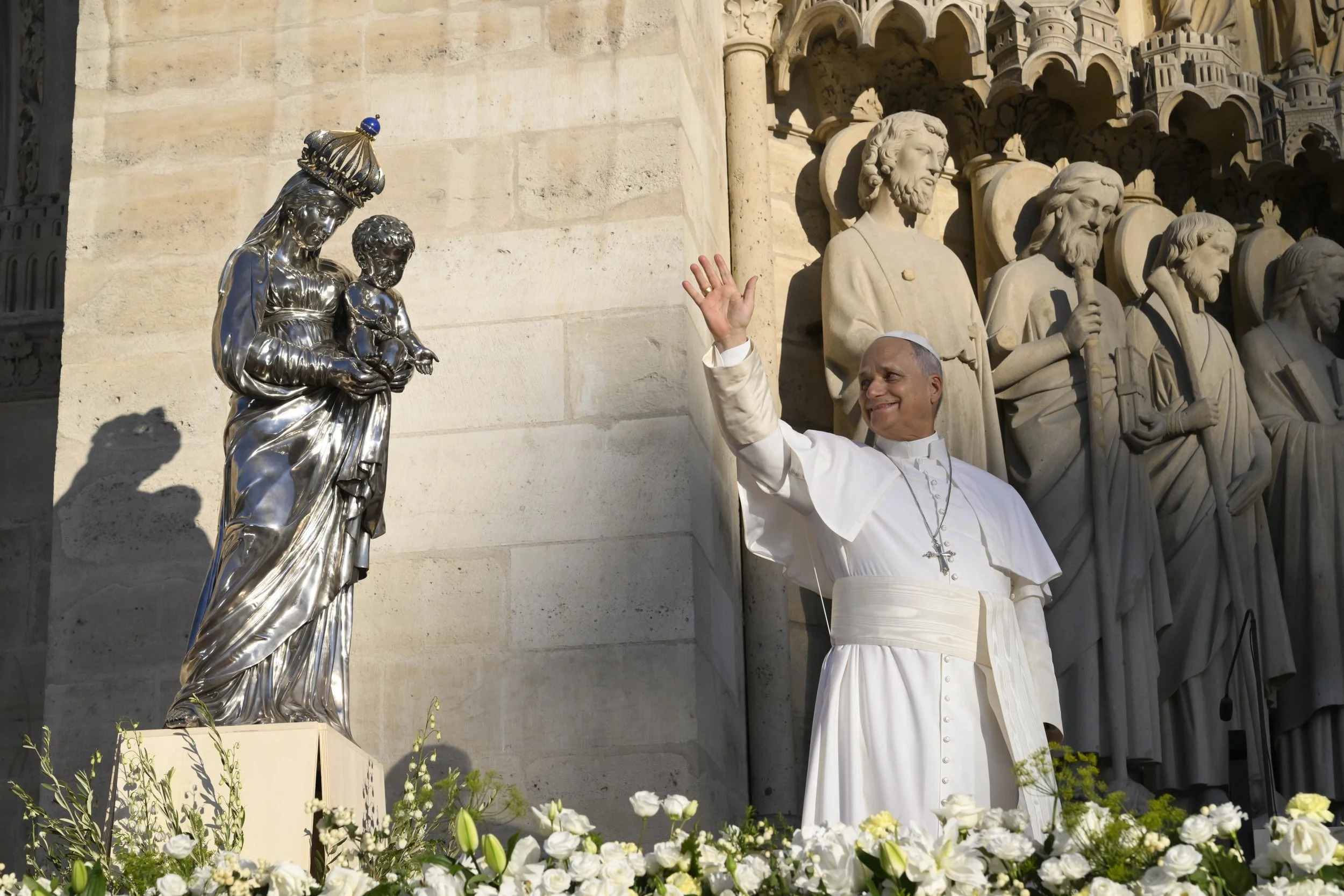
Pope Leo XIV beside the Odiot Virgin and Child at Notre-Dame de Paris, 25 September 2026. Source: Vatican News
On 25 September 2026, Pope Leo XIV arrived at Notre-Dame de Paris, becoming the first pontiff to enter the cathedral since the devastating fire of 2019 and its subsequent restoration.
Among the works accompanying this historic moment was the Vierge à l’Enfant dite de Charles X, a monumental silver sculpture from the Treasury of Notre-Dame, created by Charles-Nicolas Odiot in 1826.
Measuring 1.56 metres in height, the work was commissioned for Notre-Dame during the reign of Charles X. Executed in repoussé silver, a technique that made the monumental sculpture light enough to be carried in procession, it depicts the Virgin holding the Child Jesus, turned outward towards the faithful.
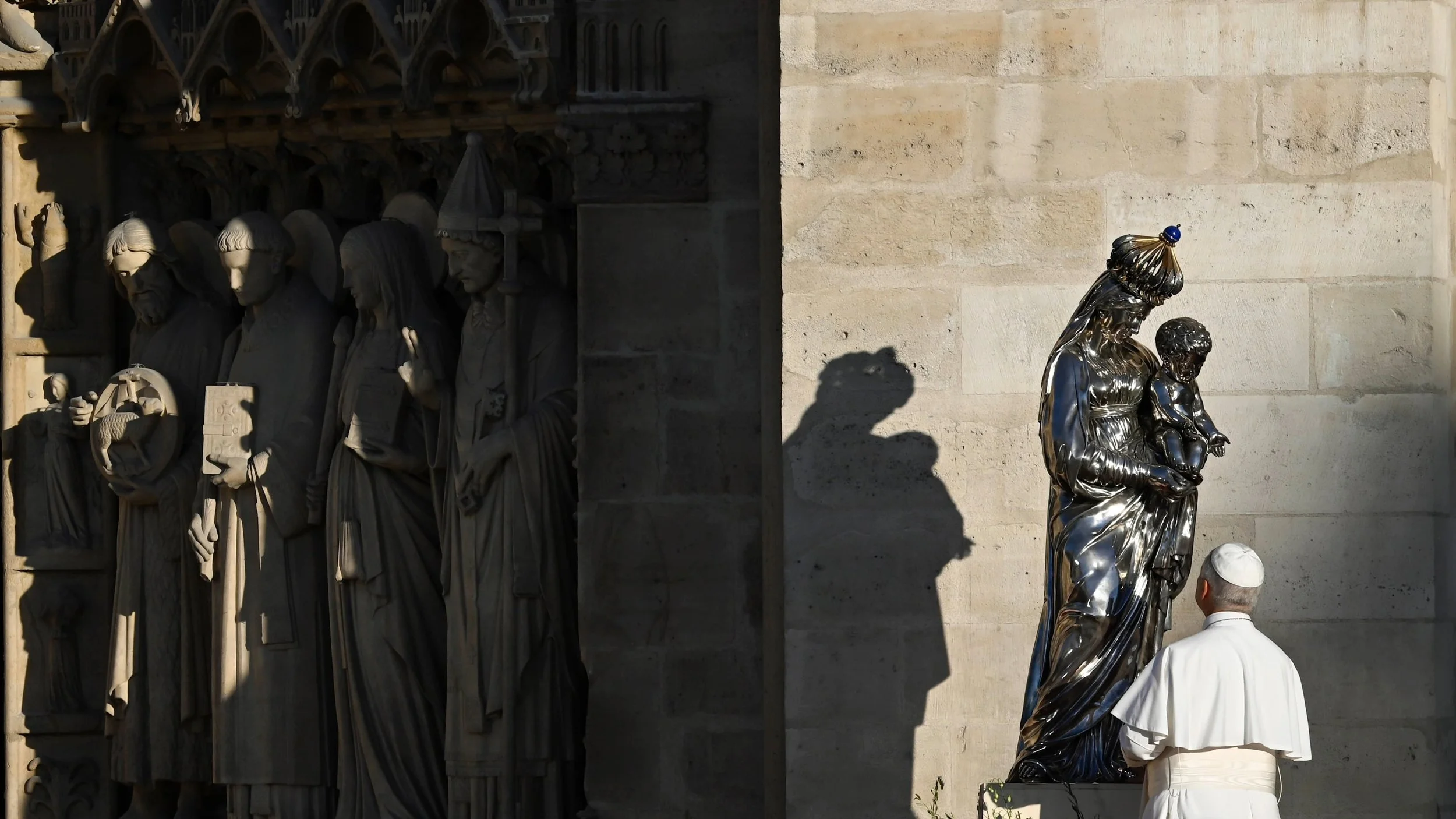
Pope Leo XIV beside the Odiot Virgin and Child at Notre-Dame de Paris, 25 September 2026. Source: Vatican News
At the conclusion of the celebration at Notre-Dame, Pope Leo XIV joined the faithful in the Salve Regina before the silver Virgin and Child — bringing an Odiot creation made exactly two centuries ago into one of the defining images of the papal visit.
A Masterpiece That Survived History
The presence of the sculpture carries extraordinary historical resonance.
Only a few years after its creation, during the sack of the Archbishop’s Palace in 1831, the Virgin was thrown from a window and damaged. It survived.
In 1847, it narrowly escaped being melted down.
It was subsequently restored in 1856 for the baptism of the Prince Imperial, son of Napoleon III and Empress Eugénie.
Nearly two centuries after its creation, the work remains part of the Treasury of Notre-Dame and continues to accompany major religious ceremonies in Paris.
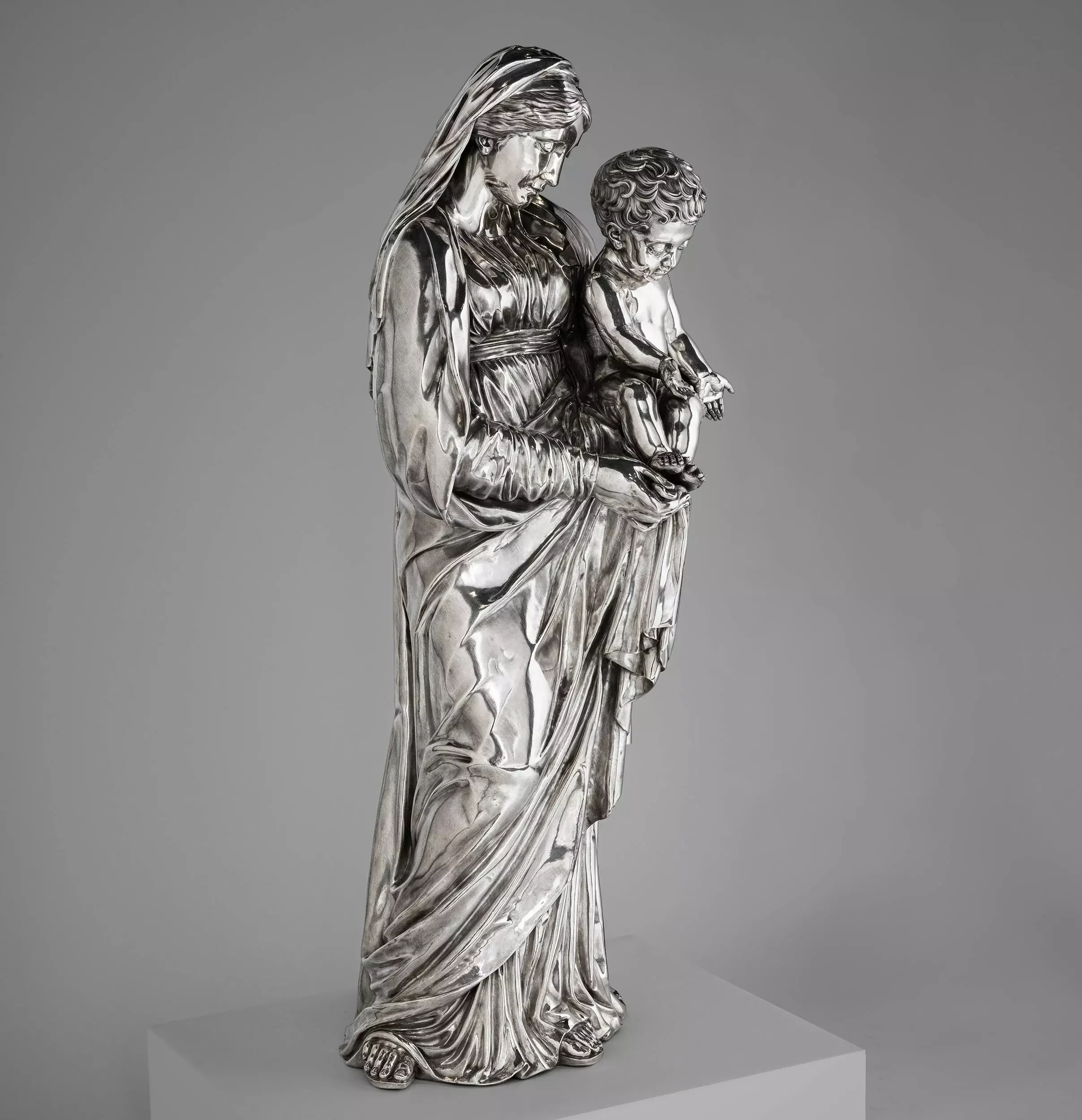
Charles-Nicolas Odiot, Virgin and Child known as of Charles X. Treasury of Notre-Dame Cathedral © Musée du Louvre, Guillaume Benoit
From Notre-Dame to the Place de la Concorde
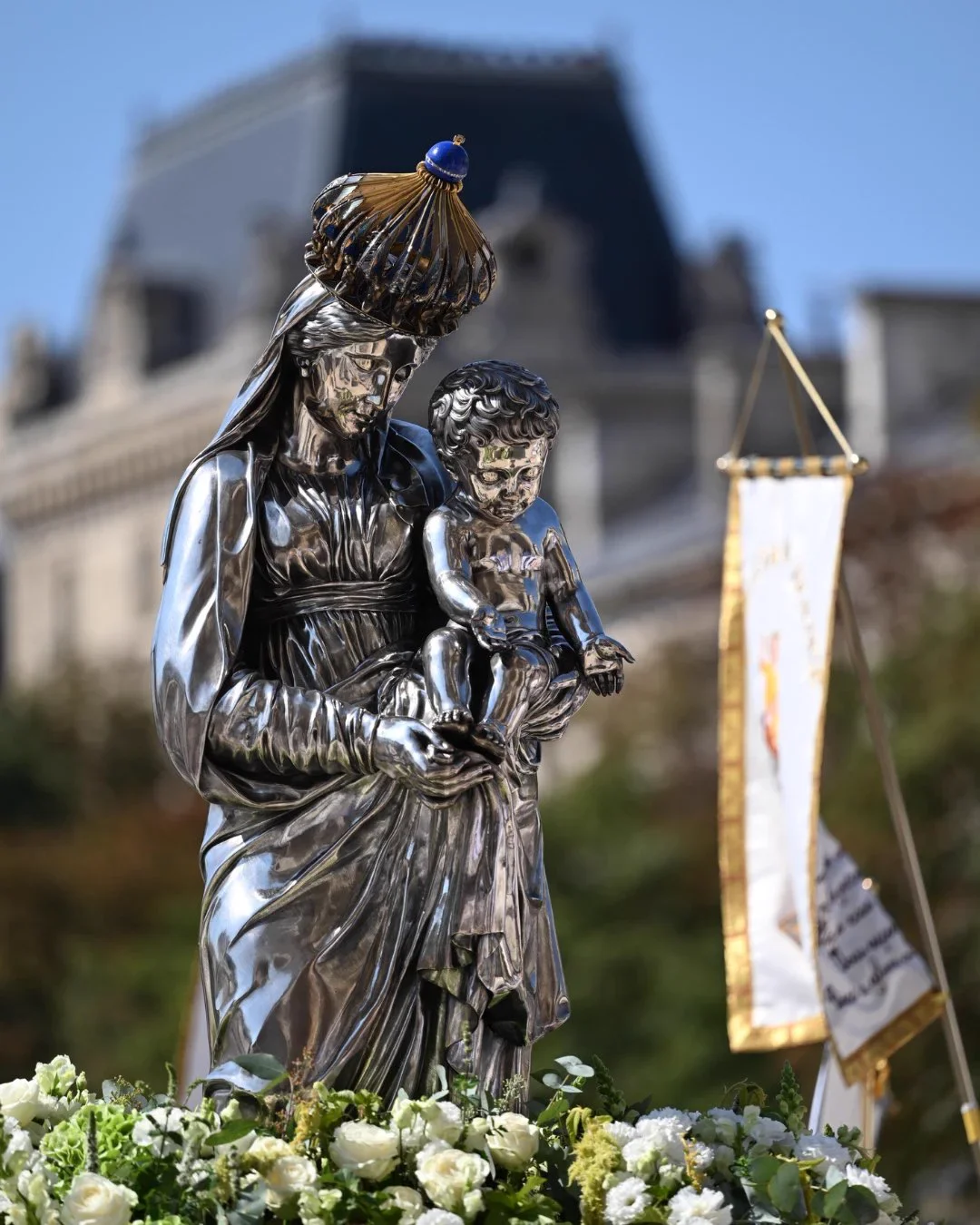
The Odiot Virgin and Child at Place de la Concorde during Pope Leo XIV’s open-air Mass, Paris, 26 September 2026.
The following day, 26 September, the Odiot Virgin and Child was prominently displayed on the stage at the Place de la Concorde for the open-air Mass celebrated by Pope Leo XIV.
A work conceived in 1826 thus found itself once again at the centre of a major moment in the history of Paris.
From Charles X to Pope Leo XIV, from the upheavals of the nineteenth century to the restored Notre-Dame of today, the silver Virgin and Child embodies the remarkable continuity of Odiot’s heritage.
Nearly two centuries later, Odiot continues this legacy in its workshop near Paris, perpetuating the exceptional savoir-faire of French silversmithing and creating pieces conceived, as they were in 1826, to endure, to be passed on and to become part of history.